
Q: With these last few days of cold weather and strong winds, I’ve decided to take some action and make my house more comfortable and efficient. My instinct tells me to eliminate the air leakage. Where should I focus my energy to achieve the best results? Also, is it possible to over-tighten my house and make my air quality worse?
 A:Tightening up your house is a great retrofit project that will produce tangible results. Sealing up the air leakage pathways in your home can certainly improve comfort, air quality, and efficiency. But, we also know that many people are concerned about making their homes “too tight.” They fear that a tight house will create poor indoor air quality.
When it comes to air leakage and air quality, there are two questions you must ask yourself:
- From where does this air leakage originate?
- Does this air leakage introduce pollutants into my home?
Based on the testing of 100’s of houses, we find that the majority of a air leakage originates from spaces like basements, crawlspaces, attics, and garages. Not only are all of these spaces unconditioned, these are also spaces that generally contain large amounts of pollutants (dust, insulation particles, fumes from paints, gasoline smells, carbon monoxide from cars, mold, etc.). As this air blows into your home, it dilutes the warmth of your home (cold air from unconditioned spaces) and brings these pollutants along for the ride.
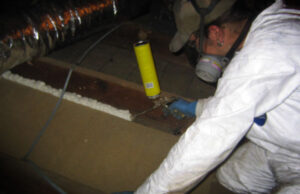 The first step in creating a healthy house is to eliminate the source of pollutants. This translates into eliminating the connection of these spaces to our interior living environment by applying a healthy dose of “air-sealing.” Coincidentally, air-sealing your home will also reduce energy consumption and increase efficiency. A win/win/win, all the way around. Once you’ve eliminated the connection, and therefore the pollutants, you can focus on where your home’s “fresh air” will come from. We’ll discuss that in the next issue of this column.
The major holes in houses are in the top and bottom of the house. Always begin air-sealing work in the top of the house. This decreases the stack effect, or chimney effect, by eliminating the holes where the warm air leaves your home. This also results in better drafting from fireplaces and water heaters, as it reduces the negative pressure in the lower portions of the house.
Seal around electrical boxes/wires, plumbing pipes, duct registers, and exhaust fans that penetrate the upper-level ceiling. Pull back the insulation that covers the top-plates of interior walls, air-seal the gaps along the edge of this top plate, and then re-insulate. If you see any chaseways, or openings traveling between floors, cover them with a rigid material, air-seal the perimeter of this piece, and then re-insulate. You’ll want to air-seal these same types of penetrations in the bottom of your house as well.
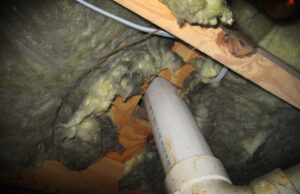 If you have flue pipes from combustion equipment (water heaters, stoves, furnaces, etc.) you’ll want to use rigid metal and fire caulking to seal around these penetrations. DO NOT allow contact between combustible materials and flue pipes.
NOTE: If you have venting combustion appliances in your home, we recommend having these units tested after any air-sealing work is done to the home (ideally before and after) to ensure that they are venting properly. If you’re not sure if you have this need, please call and I’ll help you figure it out. Combustion safety is serious stuff!
Now that you understand how to tighten your house safely, it’s time to get to work! Regardless of how macho you may be, don’t forget your respiratory mask … you’ll need it. Old insulation in the attic and who-knows-what in the crawlspace will certainly be much easier to work around when you protect your lungs and your sniffer.
Tune in next issue for information on heating system efficiency and fresh-air ventilation!